The short answer
Do you usually open a young wine that you drink the same evening? Then a wine aerator is the most convenient option: the wine gets air while you are pouring it. If you have an older wine with sediment in the bottle, or you want to present a bottle calmly at the table, then a decanter is the better choice.
Why wine needs air
In a tightly closed bottle, wine hardly comes into contact with oxygen. As soon as that happens, something changes. Odors that were trapped within the wine are released, and the flavor becomes more complex. In young red wine with a lot of tannins, you notice this the most. Tannins are the substance that makes your mouth feel dry and rough. With air, they feel softer.
That's called aerating, and it can be done in two ways. You give the wine time in a carafe, or you aerate it the moment you pour it.
What a decanter does
A decanter is a glass carafe with a wide neck. You pour the bottle into it and let the wine sit. Because of the large surface area, a lot of wine comes into contact with air at the same time.
Decanting has two purposes, and these are often mixed up:
- Inflate. A young, full-bodied red wine needs time to open up. Expect between half an hour and a few hours, depending on the wine.
- Separating the sediment. Older red wine and unfiltered wine can have sediment: precipitation at the bottom of the bottle. Pour it carefully over the sediment, and it will settle at the bottom of the bottle and not get into your glass.
The disadvantage is practical. You have to think ahead; there’s a carafe on the table and after the event you’ll have to wash up the extra glassware.
What a wine aerator does
A wine aerator, also called an aerator, provides the wine with air during serving. The wine flows through it and mixes with oxygen along the way. What a carafe does with time, an aerator does with movement.
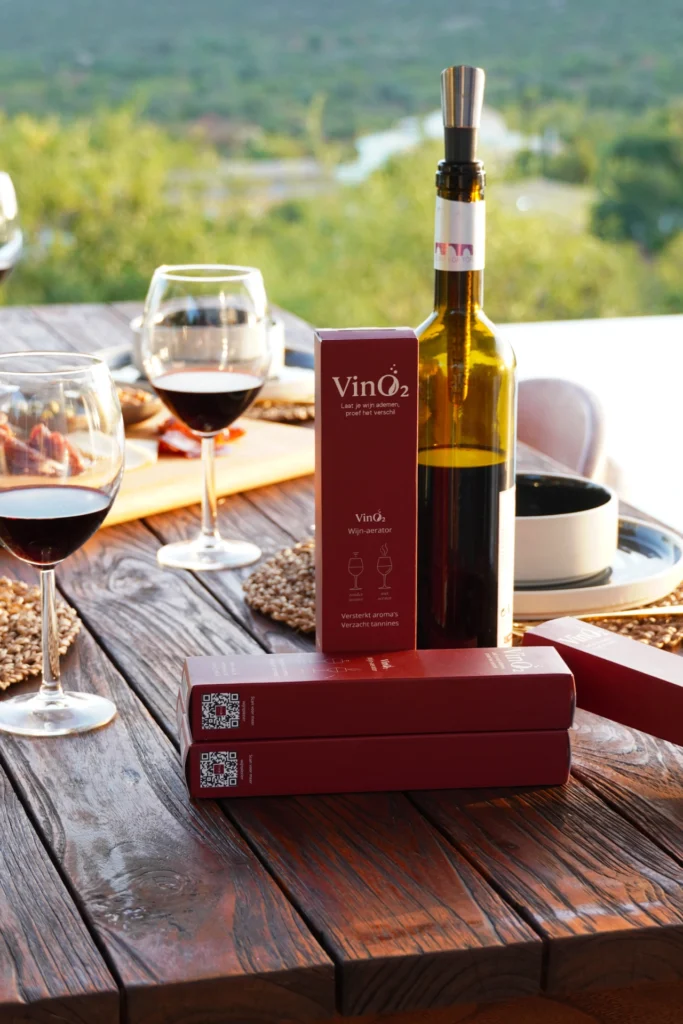
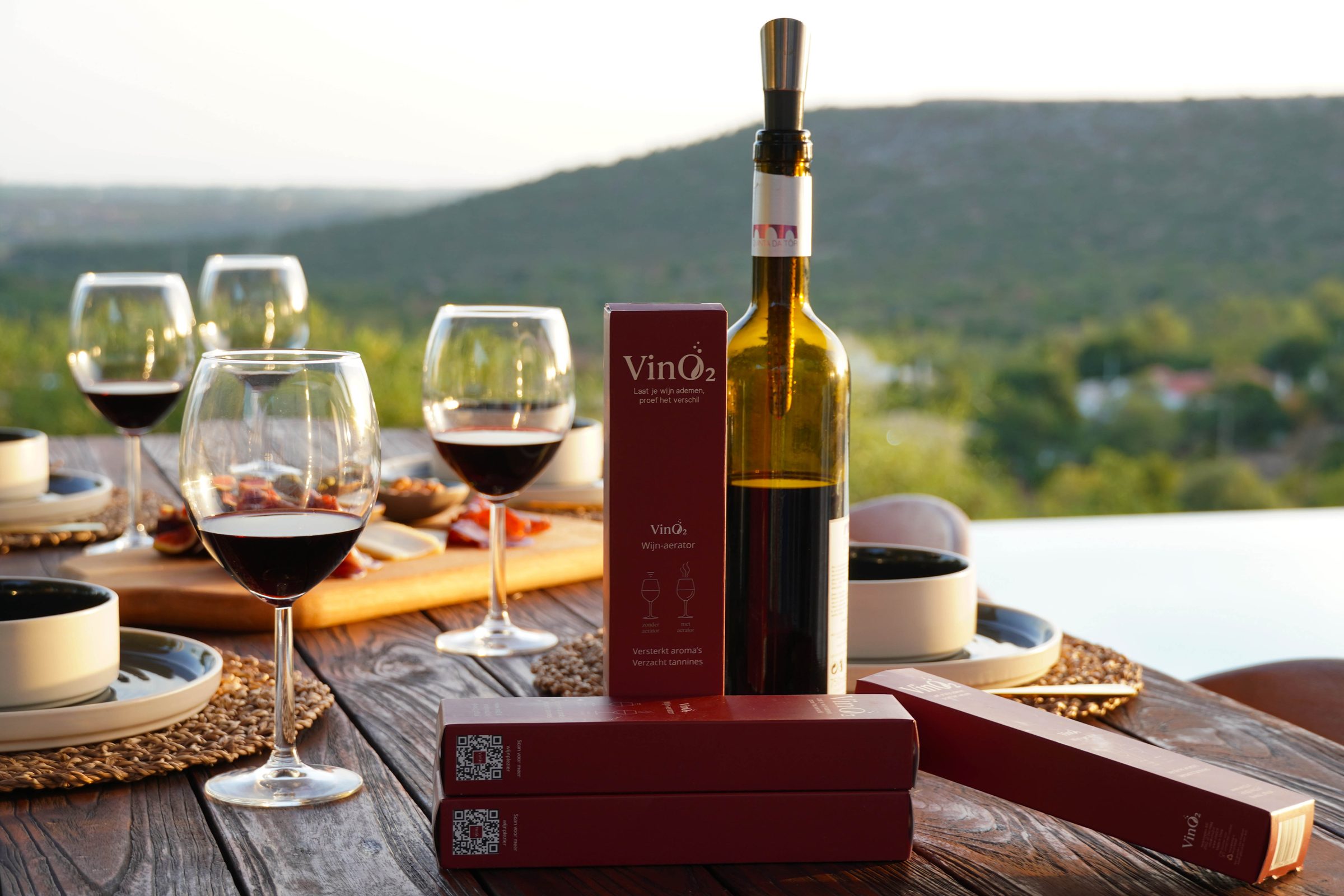
There are roughly two types: aerators that you hold above the glass, and aerators that go into the neck of the bottle. VinO₂ wine aerator It is of the second type. You put it in the bottle and pour it as you are used to.
The advantage is that you don’t have to wait and pour by the glass. There’s no carafe on the table.
A breather is not intended to separate sediment. For an old bottle with sediment, a carafe is therefore the right choice.
Decanter and wine aerator side by side
| Decanter | Wine aerator | |
|---|---|---|
| What it does | Providing air and separating sediment | Giving air |
| Waiting time | Half an hour to a few hours | No: it happens during the serving |
| How many at the same time | The whole bottle | Per glass |
| On the table | A carafe as well | Only the bottle |
| Most suitable for | Older wine with aging potential, presenting a bottle at the table | Young wine, weekdays, a glass in between |
When do you choose which one?
Choose a wine aerator as
- you open a bottle and immediately want to drink it;
- you usually drink young red or white wine;
- you want to pour it by the glass;
- you don't want extra glassware on the table.
Choose a decanter as
- You drink older wine where there is sediment;
- you know exactly which bottle you’re opening well in advance;
- It is customary to pour over the wine and set the carafe on the table at night.
Do you have a very old, fragile wine? Be careful with the air. Such wines can quickly lose their aroma. Pour them slowly to separate the sediment and drink them shortly afterwards.
Does aerating work with white wine too?
Yes, although the effect is subtler than with red wine. With white wine, the aromas are released with some air. Especially fuller white wines, for example those aged in wood, then show more aroma.
Sparkling wine does not aerate your wine. The bubbles in it disappear that way.
Can you combine them too?
It is possible, but it is rarely necessary. In practice, most people use an air compressor for weekdays and a carafé for the special bottle.
Frequently asked questions
Is a wine aerator as good as decanting?
For young wine, an aerator in a few seconds achieves the effect that you have to wait for with a carafe. Sediment separation is done with a carafe.
How long should wine sit in a decanter?
This varies per wine. For a young, robust red wine, half an hour to a few hours is typical. Test it in between: if the wine tastes open and round, it is ready.
Do you have to label every wine?
No. Light, fruity wines and sparkling wine do not need it. Young red wine with a lot of tannins benefits the most from it.
Want to see how aeration works during serving? Check out the VinO₂ or read more about wine aerators. If you're looking for something to give away, check out gift for wine lovers.